From what we see every week across Greater Manchester, the stairs are usually the first place people notice their mobility changing. That initial hesitation to make a change is completely understandable. Nobody wants to feel pushed out of their normal routine.
Our team at Stairlifts Cost understands that staying in your own home is the main priority. The truth is quite the opposite of what most expect. Catching these 5 signs it might be time for a lift early actually protects your independence.
Let’s look at the daily habits that indicate a change is needed.
This guide covers the physical signals, the emotional hurdles, and the exact next steps to take.
1. You Avoid Going Upstairs
This subtle shift often creeps up gradually. You might find yourself sleeping downstairs on the sofa because the climb feels like too much effort. People frequently stop using the upstairs bathroom or limit their trips between floors to just once a day.
We call this pattern ground-floor living syndrome. A recent report from Age UK highlights that over 30% of adults over 65 struggle with stairs. The Royal College of Occupational Therapists notes that adapting your home environment early prevents unnecessary restrictions on your daily life.
When your day revolves around avoiding steps, the staircase has become a physical barrier. A modern lift removes this obstacle entirely.
Here are common avoidance habits to watch out for:
- Leaving items on the bottom step to take up later.
- Restricting hobbies that require going to another floor.
- Washing at the kitchen sink instead of the upstairs bathroom.
- Planning your entire day to avoid a second trip upstairs.
Our customers often tell us they did not realise how much they were adapting until the lift was installed. Reclaiming your whole home brings an immediate sense of relief.
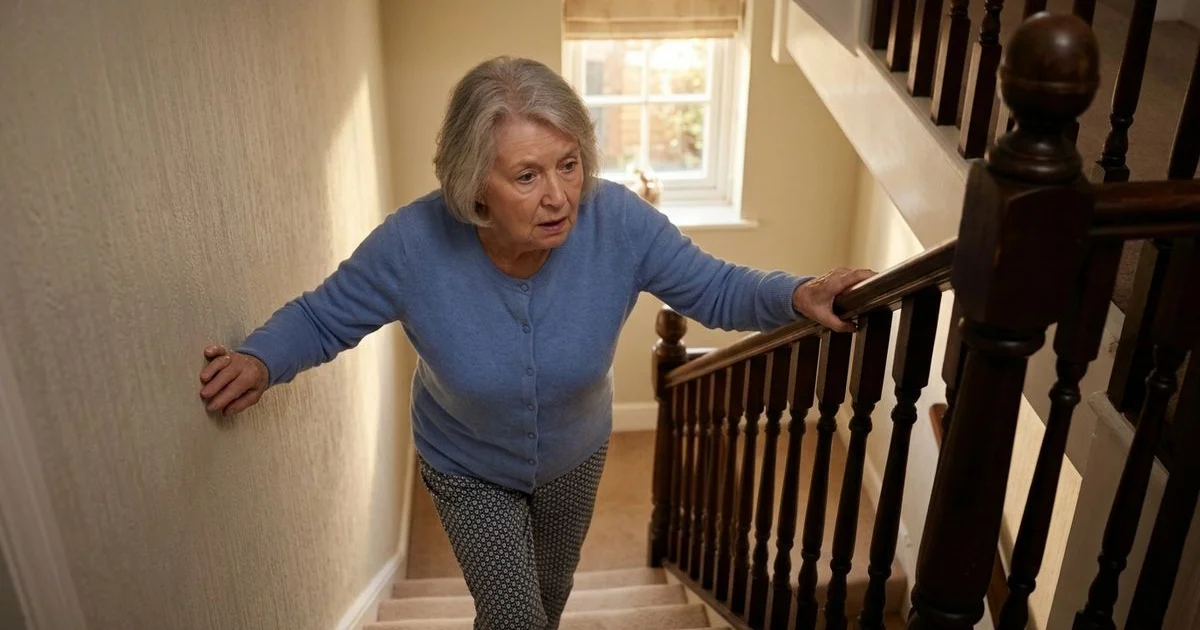
2. You Feel Unsteady or Out of Breath on the Stairs
Feeling breathless or wobbly halfway up the stairs requires immediate attention. Conditions like osteoarthritis, COPD, and general muscle fatigue make climbing incredibly difficult.
We strongly advise against pushing through the pain just to reach the landing. A fall on the stairs carries devastating consequences for older adults. The Royal Society for the Prevention of Accidents (RoSPA) reports that falls on stairs account for over 60% of fatal home accidents among the over-65s.
These physical warning signs are easy to spot:
- Inability to pass the Talk Test, which means speaking normally while climbing.
- Dizziness when reaching the top landing.
- A racing heart rate that takes minutes to settle.
- Joint stiffness that lingers long after you finish climbing.
Our priority is keeping you safe and comfortable. Eliminating the risk with a mechanical lift gives you complete peace of mind.
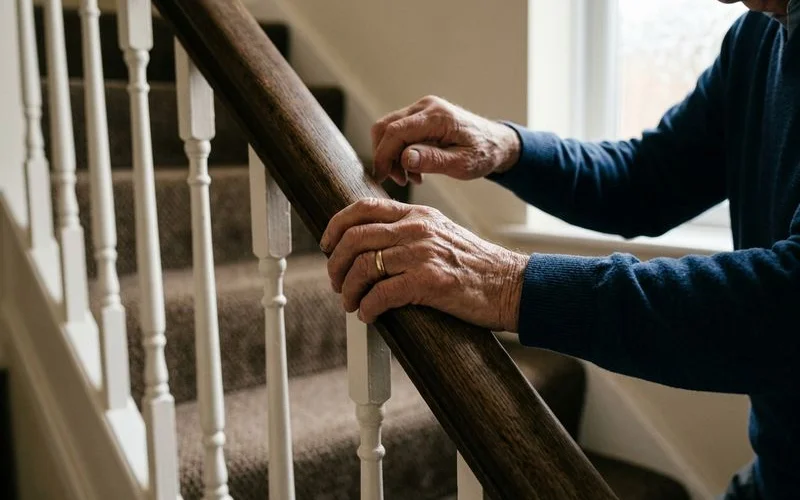
3. You Rely Heavily on the Bannister or Handrail
Using the handrail for light balance is perfectly normal. Problems arise when you start using your upper body strength to pull yourself up the steps.
We see many clients gripping the bannister with both hands just to manage the ascent. This over-reliance causes what physiotherapists call compensatory strain in your shoulders and wrists. Over time, pulling your body weight upwards damages your joints and drains your daily energy reserves.
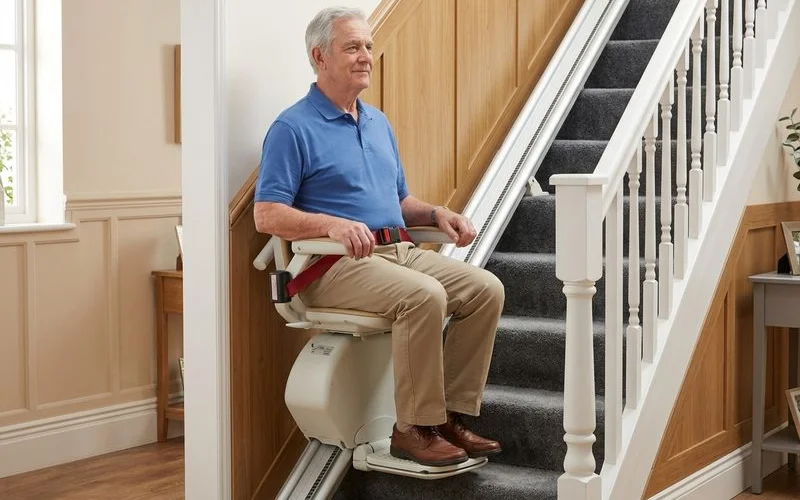
A straight stairlift or a curved stairlift takes all this pressure off your body. You arrive at your destination relaxed rather than physically exhausted.
Consider the difference in physical impact:
| Action | Physical Strain Level | Long-Term Impact |
|---|---|---|
| Pulling on bannister | High | Shoulder and wrist joint wear |
| Two-footed stepping | Medium | Knee and hip cartilage strain |
| Gliding on a lift | Zero | Preserves energy for daily activities |
Our installations ensure your staircase remains accessible to everyone else while giving you a safe ride.
4. A Family Member Has Expressed Concern
Sometimes relatives notice changes in our mobility before we accept them ourselves. Your partner, children, or regular carer might raise worries about your safety on the staircase.
We know these conversations often feel frustrating. Family members are rarely trying to take away your independence. A 2025 report from the Carers Trust highlighted that staircase falls are the number one safety fear for family caregivers.
Loved ones usually spot these specific indicators:
- You take significantly longer to climb the steps than last year.
- You show visible signs of pain or unsteadiness during the climb.
- Unexplained bumps or bruises appear from near-misses.
- You decline invitations because getting ready upstairs is too hard.
Our advice is to treat these observations as helpful feedback rather than criticism. Having an open discussion about adding a lift brings immense relief to the whole family.
5. You Have Been Told to Limit Physical Exertion
Medical professionals frequently advise older adults to reduce strain on their hips, knees, and heart. Climbing an average UK staircase of 13 steps requires significant cardiovascular effort, which slows down healing and worsens joint conditions.
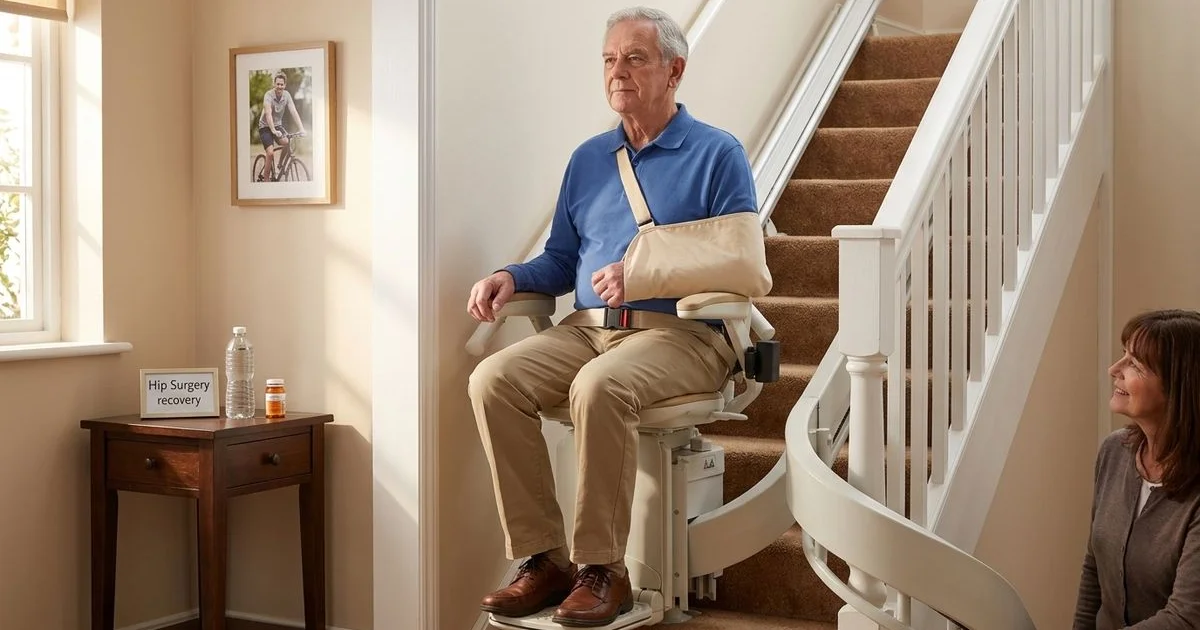
We regularly fit systems for clients who need to follow strict medical guidelines. Standard NHS discharge protocols for joint replacements specifically warn against repetitive stair climbing.
People recovering from hip or knee surgery often use a lift to maintain access to their own comfortable bed. Our temporary or permanent options prevent you from having to camp out downstairs.
Common procedures that require immediate staircase modifications include:
- Total Hip Replacements (THR)
- Total Knee Replacements (TKR)
- Major abdominal surgeries
- Cardiac bypass recovery
6. The 5 Signs It Is About Living Well, Not Giving Up
Accepting help with your mobility carries a heavy emotional weight. People often view this equipment as an admission of decline.
We hear this sentiment during almost every initial consultation. However, occupational therapists use a principle called energy conservation. By saving your physical strength on the stairs, you keep your energy for the hobbies, gardening, and family time you actually enjoy.
Our customers consistently share that this installation was their best decision. Far from shrinking their world, the lift immediately expanded their daily freedom.
With a safe mechanical lift, you can easily:
- Sleep comfortably in your own bedroom every night.
- Access the upstairs bathroom securely.
- Move around your entire home without asking for help.
- Eliminate the persistent fear of a serious fall.
- Stay securely in your beloved property for years to come.
What to Do Next
If any of these 5 signs it is time for support sound familiar, simply gather more information. Booking a free, no-obligation home survey is the easiest way to start.
We send experienced assessors across Greater Manchester, from Bolton to Stockport, to evaluate your staircase. They will measure the space, explain the options, and provide a clear quote that matches your budget.
Our stairlift costs are transparent and highly competitive. High-quality new straight stairlifts start from just £1,195, and the fitting process usually takes as little as two hours with zero mess left behind.
There is absolutely no pressure to make a rushed choice. You take all the time you need to decide.
Call us today on 07897 037526 or visit our contact page to arrange your complimentary survey.