From what our team sees every week across Greater Manchester, tight staircases are the primary reason people delay getting mobility support. Many homeowners assume their Victorian terrace or cottage simply lacks the space.
We are Stairlifts Cost, a family-run business dedicated to helping residents across Greater Manchester regain their independence at home. That initial worry about space makes total sense.
When customers ask “Will a Stairlift Fit My Narrow Stairs? Dimensions and requirements seem so confusing,” the answer is almost always yes. Let’s look at the actual data and explore the practical solutions available in 2026.
Our engineers have successfully installed mobility aids in spaces most people would consider impossibly small. Here is exactly what you need to know about staircase widths.
What Is the Minimum Width for a Stairlift?
The absolute minimum staircase width for a standard installation sits around 28 inches (approximately 71cm). This figure covers the vast majority of standard models available in the UK right now. Our fitters frequently work within these exact parameters to provide safe, comfortable transit.
A common misconception is that older properties fall well short of this measurement. Data from recent 2026 housing surveys shows the average UK staircase actually measures between 31 and 33 inches wide. We find this provides plenty of room for both the equipment and regular foot traffic.
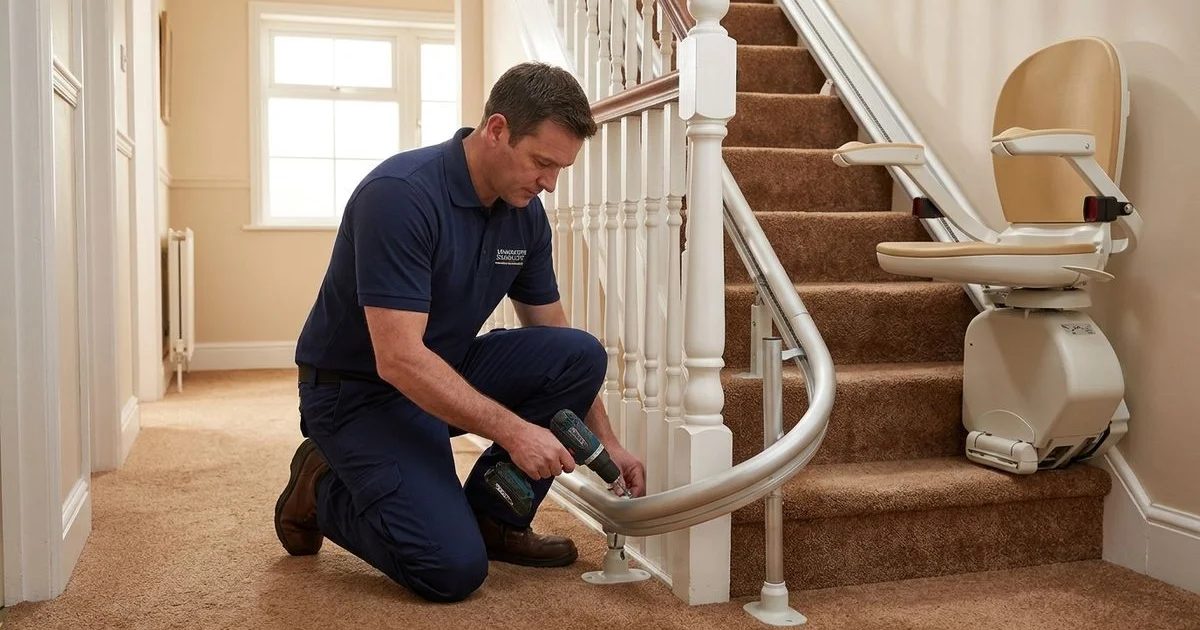
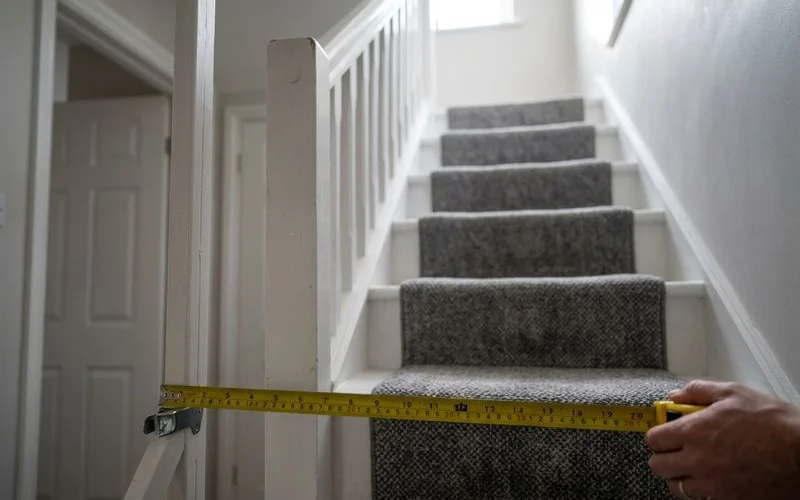
Of course, every home presents unique challenges that require a closer look. Obstructions like chunky radiators, deep skirting boards, or low-hanging utility boxes can reduce your usable space. Our team accounts for every single millimetre during a free home survey.
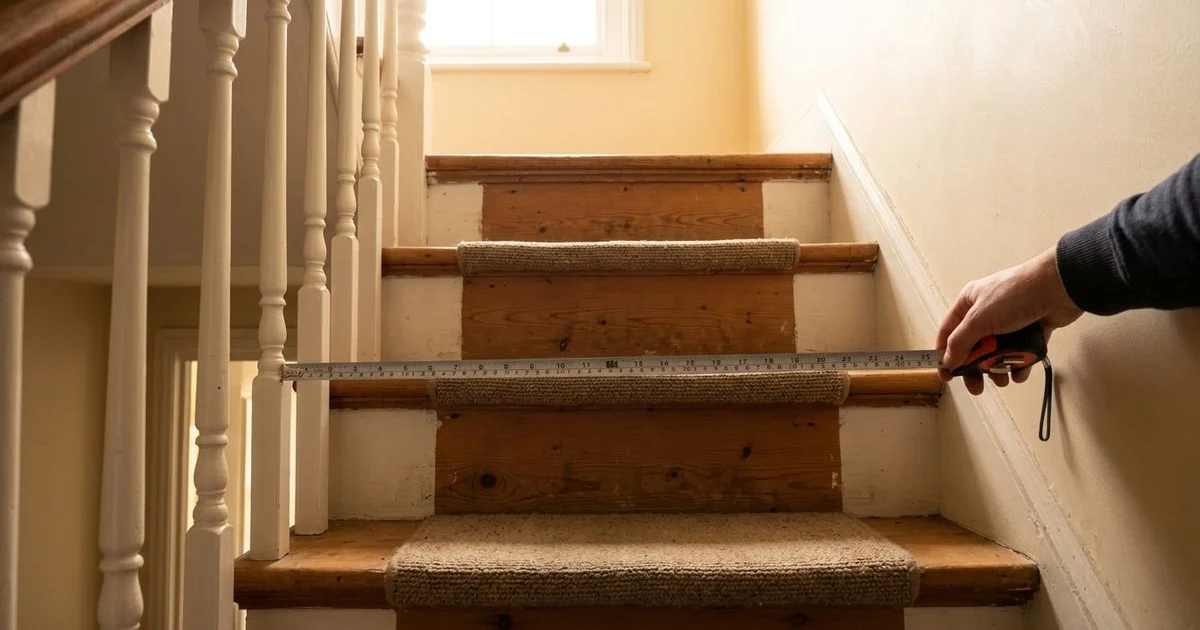
”The single biggest mistake homeowners make is measuring the steps themselves and guessing a carriage will not fit. Professional laser measurements change everything, revealing inches of usable space you never knew you had.”
This quick professional assessment takes just a few minutes and provides complete clarity on your options.
How Much Space Does a Stairlift Actually Take Up?
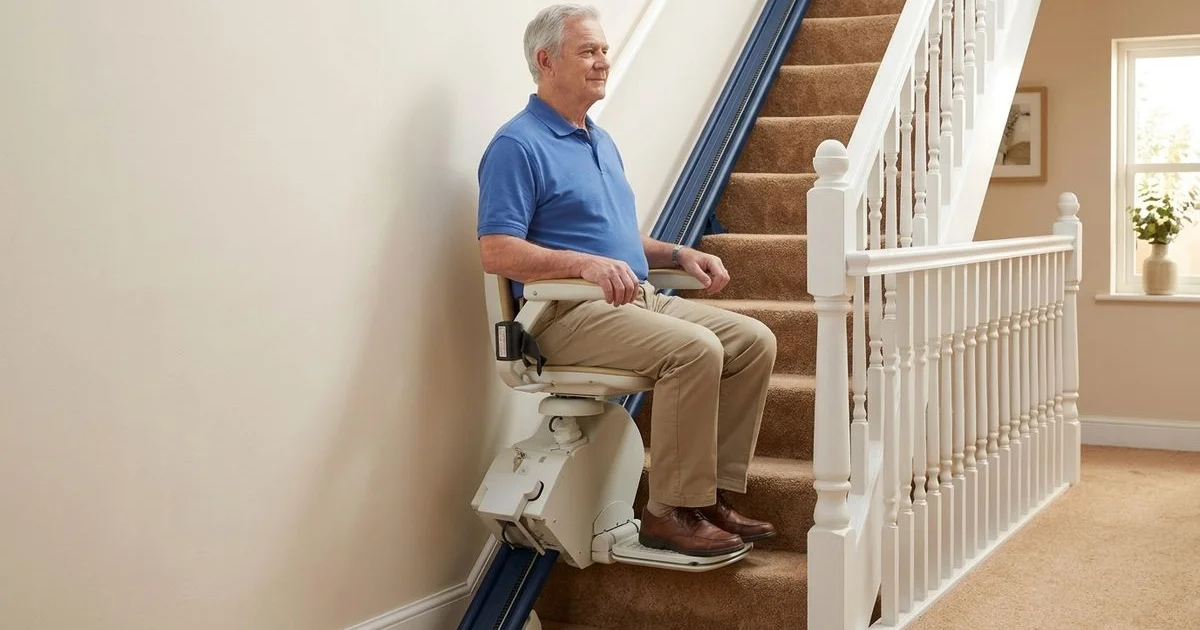
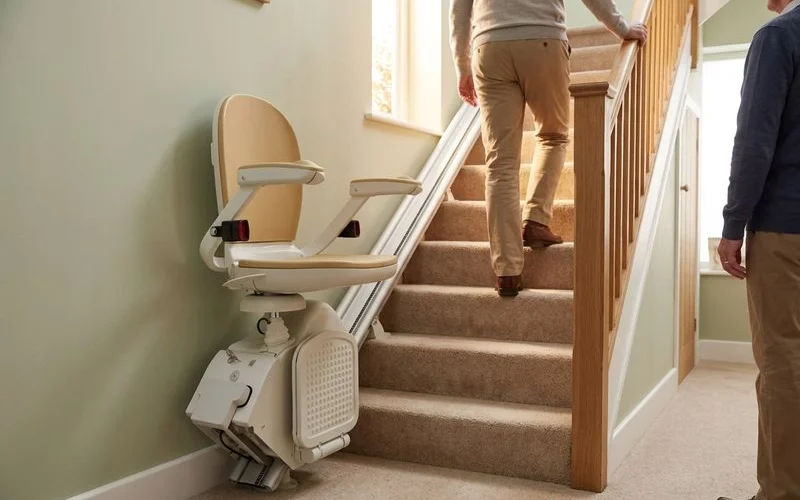
People often picture a massive machine blocking the entire hallway. Modern units are incredibly slim and fold away neatly when not in action. Our customers are consistently surprised by how little room these devices actually require to operate safely.
Let us break down the exact measurements you can expect in your home. The track itself sits flush against the stairs rather than the wall, usually protruding just 6 to 7 inches. This clever positioning preserves the maximum amount of walking space for your family.
| Component | Average Space Taken (Inches) | Practical Impact |
|---|---|---|
| Track / Rail | 6 to 7 inches | Leaves most of the step completely free for walking. |
| Folded Seat | 12 to 14 inches | Easy for others to walk past without squeezing. |
| Unfolded Seat | 22 to 24 inches | Only occupies maximum space during active transit. |
We highly recommend looking at the Acorn 130 for particularly tight spaces. Its seat, armrests, and footrest all fold up incredibly tight against the carriage. Folded up, this specific model occupies just over 12 inches of width.
Other household members can easily walk up and down the steps without bumping into the folded equipment.
Manchester’s Terraced Houses and Older Properties
Greater Manchester boasts a massive supply of stunning Victorian and Edwardian terraced houses. These beautiful heritage properties frequently feature steep and narrow staircases. Our teams have fitted mobility equipment in these exact home styles for well over a decade.
Historical building practices dictated a standard staircase width of 32 inches for working-class terraces in the late 19th century. Homes in Denton, Ashton-under-Lyne, Stockport, and Oldham heavily feature this classic design. We know these specific architectural layouts inside and out.
This historical standard is perfectly adequate for modern slimline models. You do not need a grand, sweeping hallway to stay safely in your own home.
Typical traits of local terraced staircases we successfully navigate include:
- Steep pitches frequently exceeding 42 degrees.
- Narrow treads combined with unusually high risers.
- Winding or curved steps at the very top or bottom of the flight.
- Plaster walls that require specific, careful fixing methods.
What If My Stairs Are Exceptionally Narrow?
Sometimes a staircase measures slightly under the standard 28-inch threshold. You still have excellent, highly practical options available to explore. Our engineers specialise in finding creative ways to maximise heavily restricted spaces.
Perch-style seats
A perch seat offers a fantastic alternative to a traditional sit-down carriage. You travel in a semi-standing position with your body weight supported by a high, ergonomically shaped pad. This upright setup drastically reduces the required knee room by up to 8 inches. Our clients with stiff knees or hip problems often prefer this upright posture anyway, making the perch design a brilliant dual-purpose solution.
Rail positioning
Proper track placement makes a massive difference on a tight flight of stairs. Installers can fit the rail closer to the skirting board or even utilise a drop-nose track design. We always test multiple configurations to leave as much clear room as physically possible.
Hinged rails
A door located right at the bottom of the steps presents a unique challenge for narrow spaces. A powered hinged rail section fixes this problem instantly and elegantly. This mechanism automatically folds the bottom section of the track upwards and out of the doorway when the carriage travels up. We install these hinges regularly because narrow stairs and tight bottom hallways almost always go together.
Building Regulations
Safety remains the absolute top priority for any home modification project. Under UK building regulations, specifically Approved Document K, a staircase must maintain a safe, clear width for other users. Our site assessments strictly adhere to these national safety guidelines.
Private domestic dwellings have very different rules compared to public commercial buildings. You do not legally need to maintain the same massive clearances required in a public hospital or shopping centre. We simply need to ensure family members and emergency services can still safely ascend and descend the steps on foot.
Safety always comes before making a sale. If fitting a track would make your stairs genuinely dangerous for others to use, we will tell you directly. Our reputation relies entirely on providing honest, practical advice.
What Gets Measured During a Home Survey?
Guessing simply does not work with custom mobility installations. A professional home survey provides the exact, verifiable numbers needed to move forward confidently. Our technicians use precise laser mapping tools to evaluate your space in minutes.
The standard site assessment covers five crucial factors:
- Overall staircase width: Measuring wall to wall, or wall to the bannister.
- Usable width: Accounting for radiators, thick skirting boards, or decorative dado rails.
- Staircase length: Determining the exact track length required to reach the top landing.
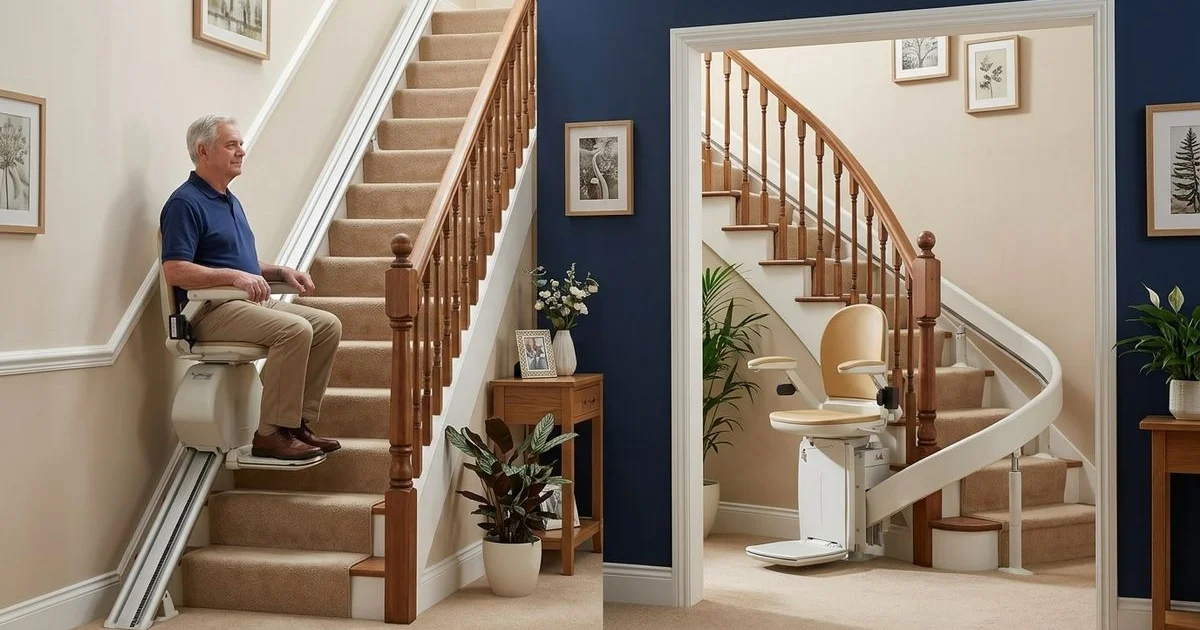
- Any bends or turns: Establishing whether a straight or a custom curved stairlift is necessary.
- Top and bottom clearances: Ensuring the carriage can park safely without blocking vital doorways.
This entire process happens quickly and without causing any disruption to your day. We just need a clear path up the steps for about fifteen minutes.
Do Not Assume Your Stairs Are Too Narrow
Most customers genuinely believe their home is too small before we arrive. Proper, professional measurements almost always reveal plenty of usable room. Modern manufacturers engineer these systems specifically for the compact architecture found in British homes.
The fastest way to eliminate your worry is to get exact numbers from a professional. Our home surveys cost absolutely nothing and carry zero obligation to buy. We provide honest, straightforward answers on the spot.
If a solution works, we show you the exact blueprint and stairlift pricing. If the space is genuinely too tight, our surveyor will explain exactly why and suggest alternatives.
Call us directly on 07897 037526 or visit our contact page to arrange your free assessment. We cover every postcode in Greater Manchester and usually secure an appointment within 48 hours. Take that crucial first step towards making your entire home accessible again.